
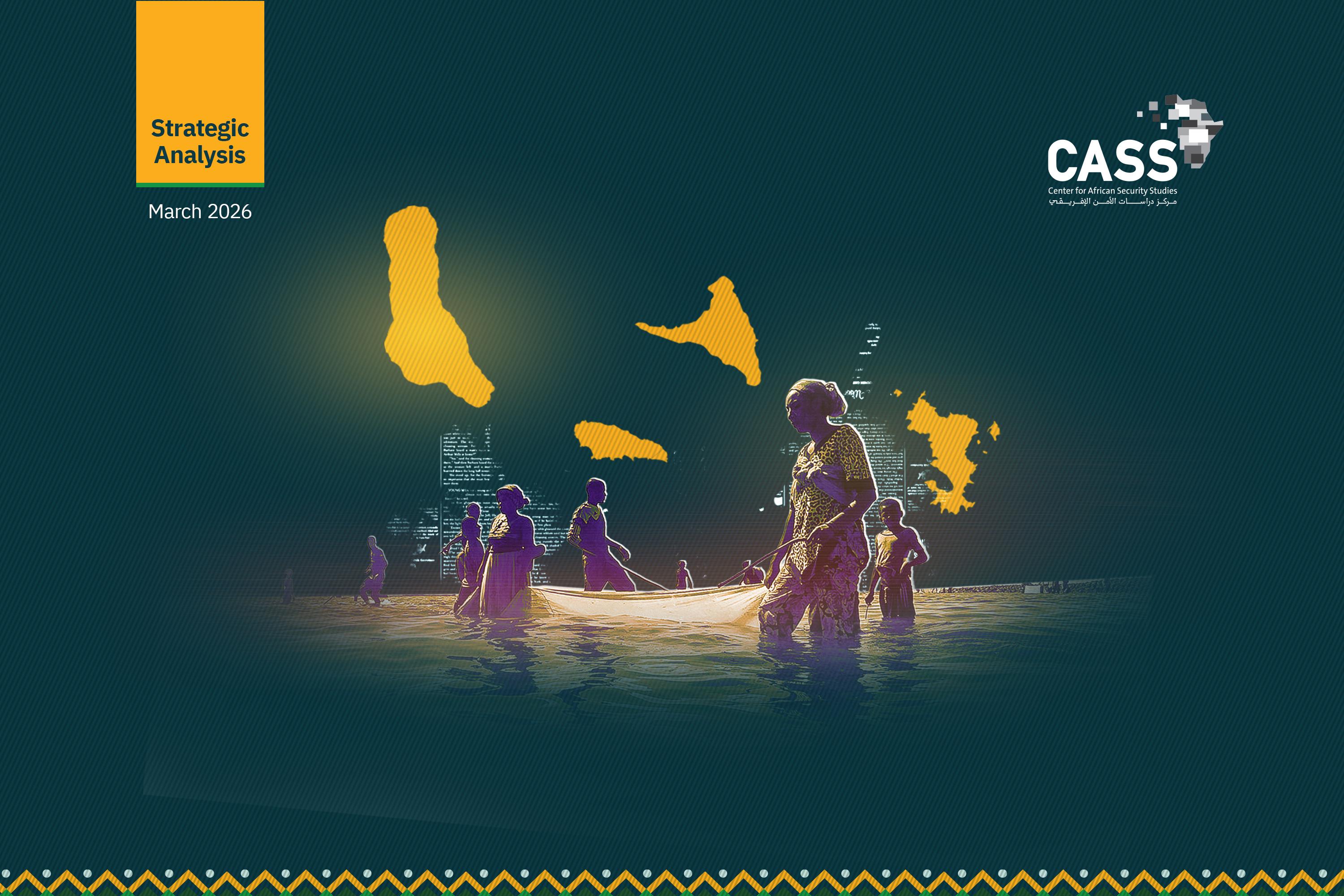
The issue of irregular migrant camps and settlements in the Comoros and the island of Mayotte has evolved from a limited phenomenon into a near-permanent structure of fragile human settlements with increasingly significant security dimensions.
The emergence of these settlements dates to the political and economic transformations that swept the Comorian archipelago from the 1970s onwards, when the island of Mayotte chose to remain under French sovereignty. This decision created a stark development gap between Mayotte and the rest of the islands, turning it into a primary magnet for migrants — particularly from the island of Anjouan. Irregular migration via rudimentary boats, known locally as "kwasa-kwasa," soon became a near-daily occurrence despite its considerable dangers.
These migration flows gradually gave rise to informal residential clusters — effectively unregistered camps — spread across the outskirts of cities and marginalised areas of Mayotte. These settlements are characterised by an almost total absence of basic infrastructure, with large numbers of migrants living in makeshift shelters constructed from corrugated metal or other rudimentary materials, amid extremely high poverty rates and severe shortages of clean water and public services.
The scale of this phenomenon has reached unprecedented levels. Estimates suggest that between 100,000 and 200,000 irregular migrants currently reside in Mayotte — equivalent to roughly half the island's total population by some projections — a figure that reflects the transformation of these settlements from a transient emergency into an entrenched demographic reality.
These camps and settlements are predominantly concentrated in urban and peri-urban zones, and are closely tied to organised smuggling networks operating along the sea route between the Comoros and Mayotte. This route is now ranked among the most dangerous irregular migration corridors in the world. Estimates indicate that approximately 10,000 people have perished since the mid-1990s while attempting the crossing, due to severe overcrowding on vessels, inadequate equipment, and the near-total absence of effective maritime oversight.
The dangers posed by these settlements extend well beyond the humanitarian sphere to constitute a multi-dimensional security challenge. The precarious conditions prevailing within these camps create fertile ground for organised crime, including human trafficking, drug smuggling, and the systematic exploitation of migrants. Criminal networks exploit weak oversight and the absence of effective state authority in these areas.
At the same time, these settlements have been linked to rising rates of local crime and intensifying social tensions. Segments of the resident population in Mayotte increasingly associate irregular migration with growing levels of violence and theft, a dynamic that has given rise to local pressure movements calling on the authorities to adopt more stringent measures.
The security threat carries a pronounced maritime dimension as well. The constant flow of unauthorised vessels presents an enduring challenge for maritime security agencies, compelling them to conduct interception operations that are sometimes characterised by the use of force. This has resulted in drowning incidents and loss of life, and reflects the escalating confrontation between trafficking networks and security forces.
In response to these challenges, the states concerned — most notably France in its capacity as the administering power of Mayotte — have pursued an intensified security approach. This has been most visibly expressed through large-scale operations such as Operation Wambushu, which targeted the dismantlement of informal neighbourhoods and the deportation of irregular migrants to the Comoros, alongside reinforced security deployments and mass arrest-and-expulsion campaigns.
Additional measures have included enhanced maritime surveillance through coastguard operations and the interception of vessels before they reach Mayotte's shores, as well as tighter nationality and residence legislation designed to reduce the island's appeal as a migration destination.
These policies, however, face substantial constraints. Available evidence suggests that stringent security measures do not necessarily reduce migration flows; on the contrary, they may push migrants towards even more dangerous routes and increase the profits of trafficking networks, thereby reinforcing the criminal dimensions of the phenomenon rather than containing it.
A further complication concerns bilateral relations: deportation policies have generated tensions between France and the Comoros, particularly during periods when the Comorian authorities refused to accept deportees.
Conclusion
The irregular migrant settlements of the south-western Indian Ocean have long ceased to be a simple reflection of poverty and displacement. They have evolved into a complex structure that fuses humanitarian, security, and political dimensions in equal measure. The prevailing trajectory suggests that the persistence of the development gap between the islands, combined with the limited reach of regional political solutions, will entrench these settlements as a permanent feature — carrying with it progressively serious implications for local and regional stability.