
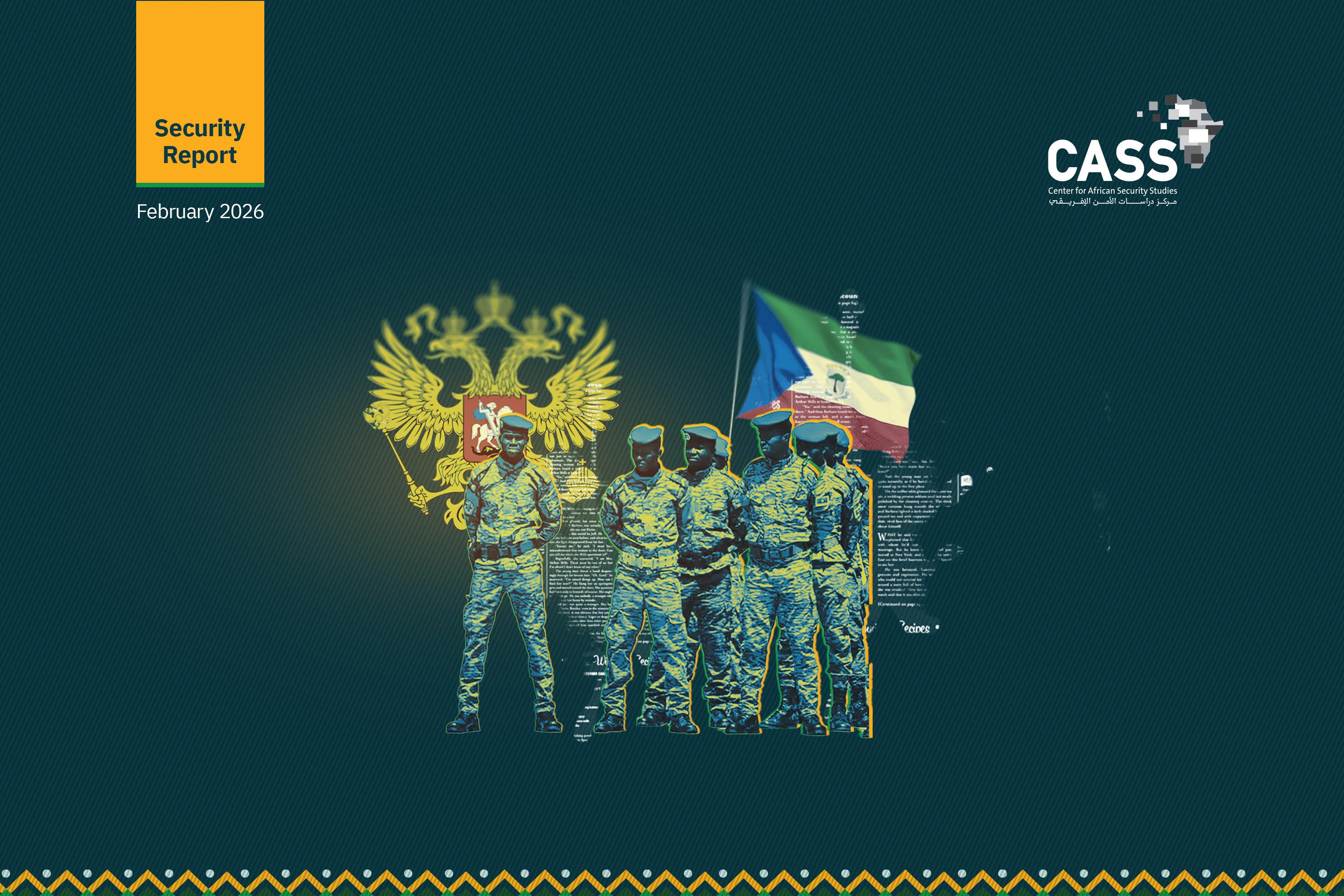
Russia is beefing up its efforts to win over the youth in Equatorial Guinea, with a network of cultural centers that show movies, teach young people Russian—and funnel them into military training.
On February 17, Russia inaugurated a new “cultural center” in the capital Malabo. As well as providing Russian classes, it serves as a platform for screening war films, recently showing Palestinian-Syrian filmmaker Abdallah Al-Khatib’s “Chronicles From the Siege.” The center specifically targets young people.
The new facility adds to two existing “cultural” centers in the city: the Russian Cultural Center or Russian House, which opened in December 2024, and the Center for Open Education and Russian Language, which began operating in 2025 and received a significant boost in February 2026 with the arrival of specialized instructors from St. Petersburg State University.
These centers appear to be intended as “test cells” to attract and recruit young Africans to fight in Ukraine or join Russia’s Africa Corps (formerly the Wagner Group) in exchange for financial promises and training.
Some 200 Russian soldiers and trainers are stationed in Equatorial Guinea, where they are tasked with protecting President Teodoro Obiang Nguema Mbasogo and training the new 684-strong Rapid Reaction Brigade.
Russia is seeking to use Equatorial Guinea’s ports as logistical hubs for its warships, such as the landing ship Alexander Otrakovsky, which visited Malabo in January.
This presence poses a direct threat to U.S. interests in the Atlantic.
Russia also acts as a security guarantor for the regime, protecting Obiang and his son and vice president “Teodorín,” in exchange for influence in the oil and gas sector and for the marginalization of traditional Western influence in the region.
Equatorial Guinea is considered the cornerstone of the new Russian arc of influence, stretching from the coast to Central Africa and giving Moscow a platform to monitor the resource-rich Gulf of Guinea.
The Equatorial Guinea model represents the second phase of Russian expansion in Africa. Moscow is no longer content with sending and funding mercenaries to protect regimes. Today, it is establishing long-term cultural and security infrastructure in the country. Transforming Malabo into a logistics hub for the Russian fleet would effectively breaks NATO’s monopoly on the Atlantic and encircles Western energy interests in the Gulf of Guinea.